A Brief History of Val d'Isère
02.
Resort Development
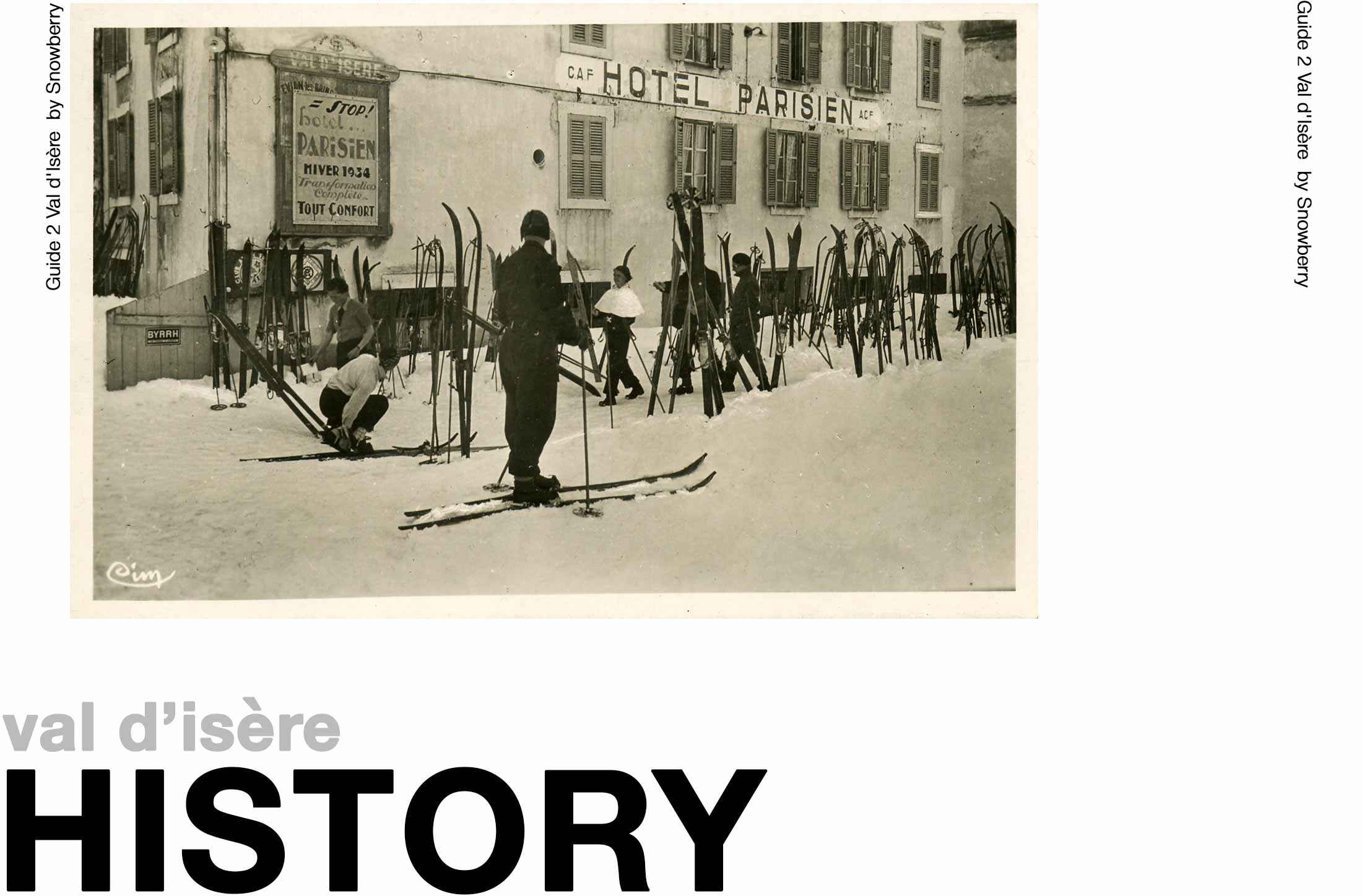
This age-old pattern changed when skiing – always a way of getting around the mountians in the winter – started to develop as a sporting pastime for mainly wealthy people. Suddenly Avalins could earn money in the winter without having to leave home!
Business was slow to start with. The first visitors started to arrive from the 1880s onwards with the first hotels including the Moris on the site of the current K2 and the nearly Parisien opening in 1888.
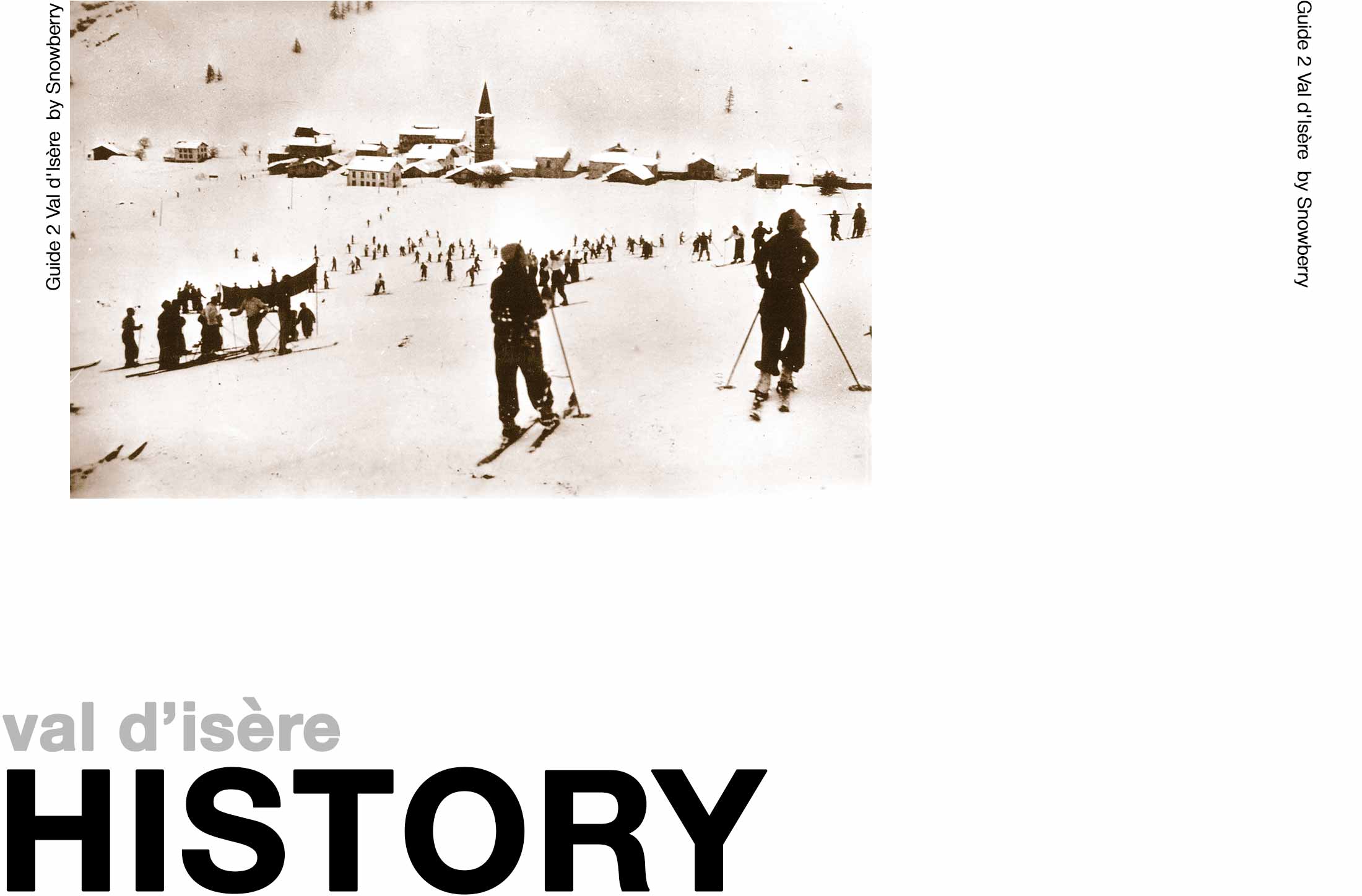
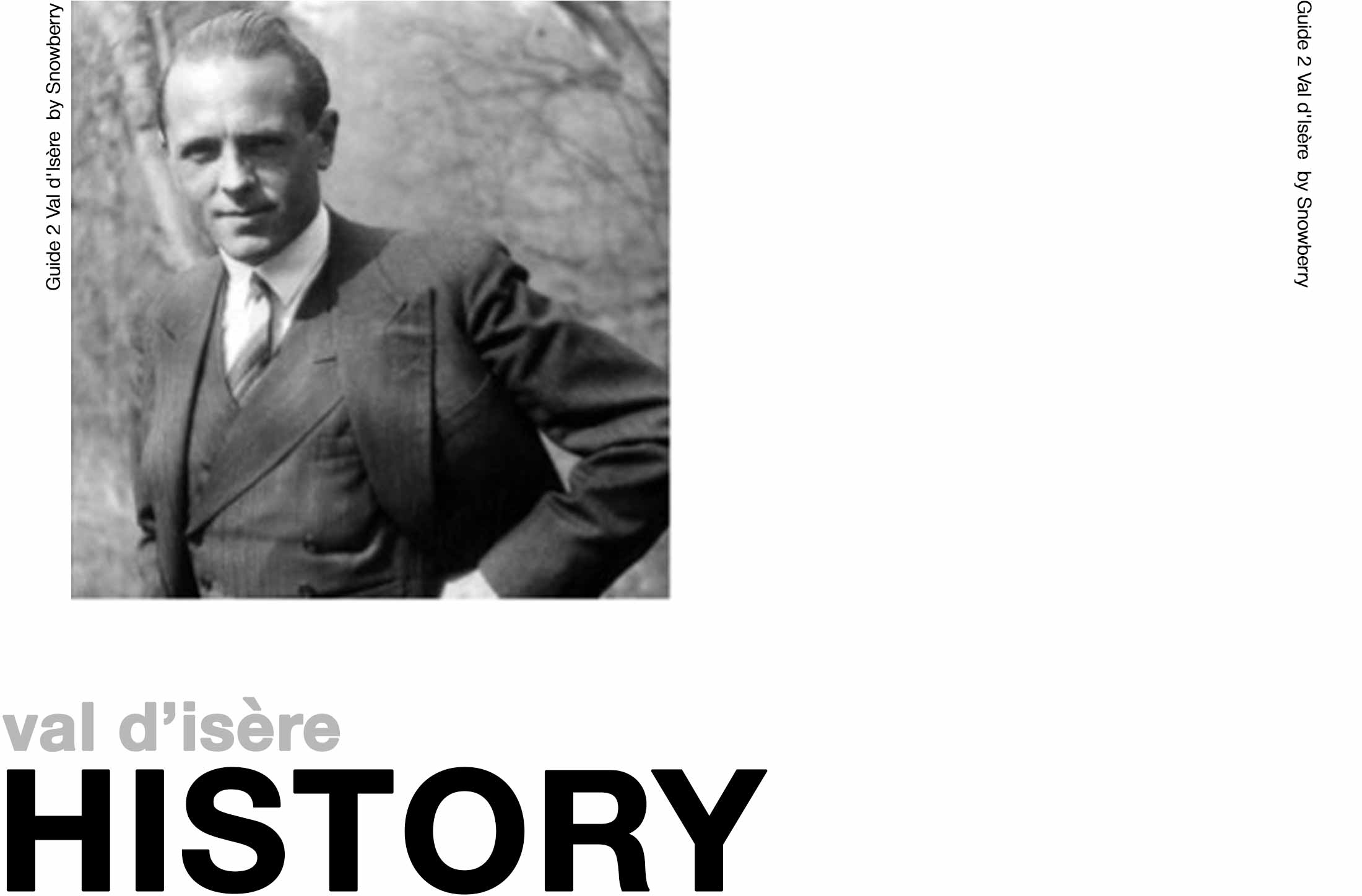
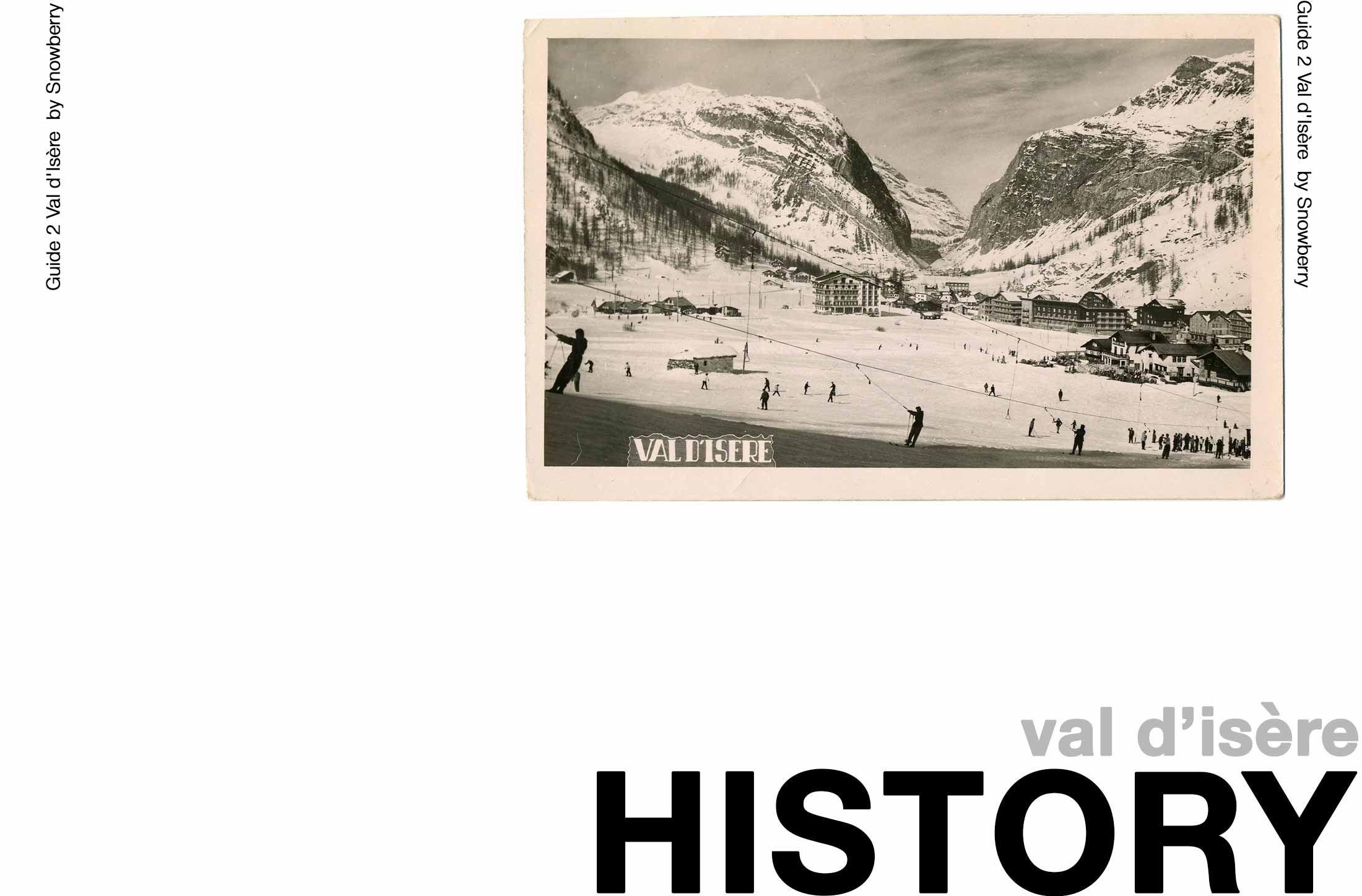
Initially most of the tourists came in Summmer but in 1929 a young Parisian, Jacques Moufflier, with plenty of money and a taste for adventure, visited Val d’Isère and saw its potential for skiing. Over the next few years he and the Mayor of Val D’isere begin planning and by the winter of 1932/33 two Austrian ski instructors had arrived and the locals lads were learning the trade.
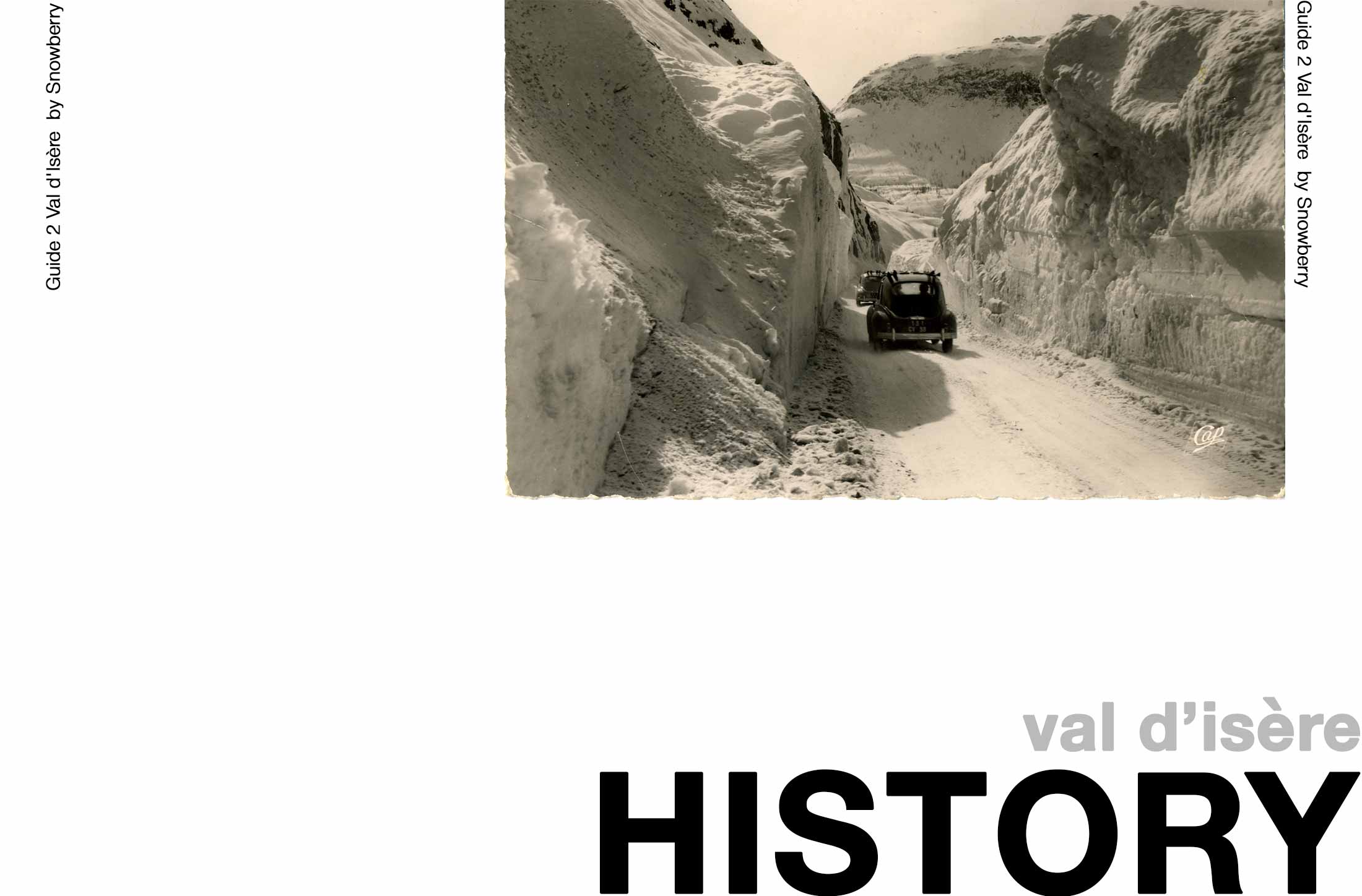
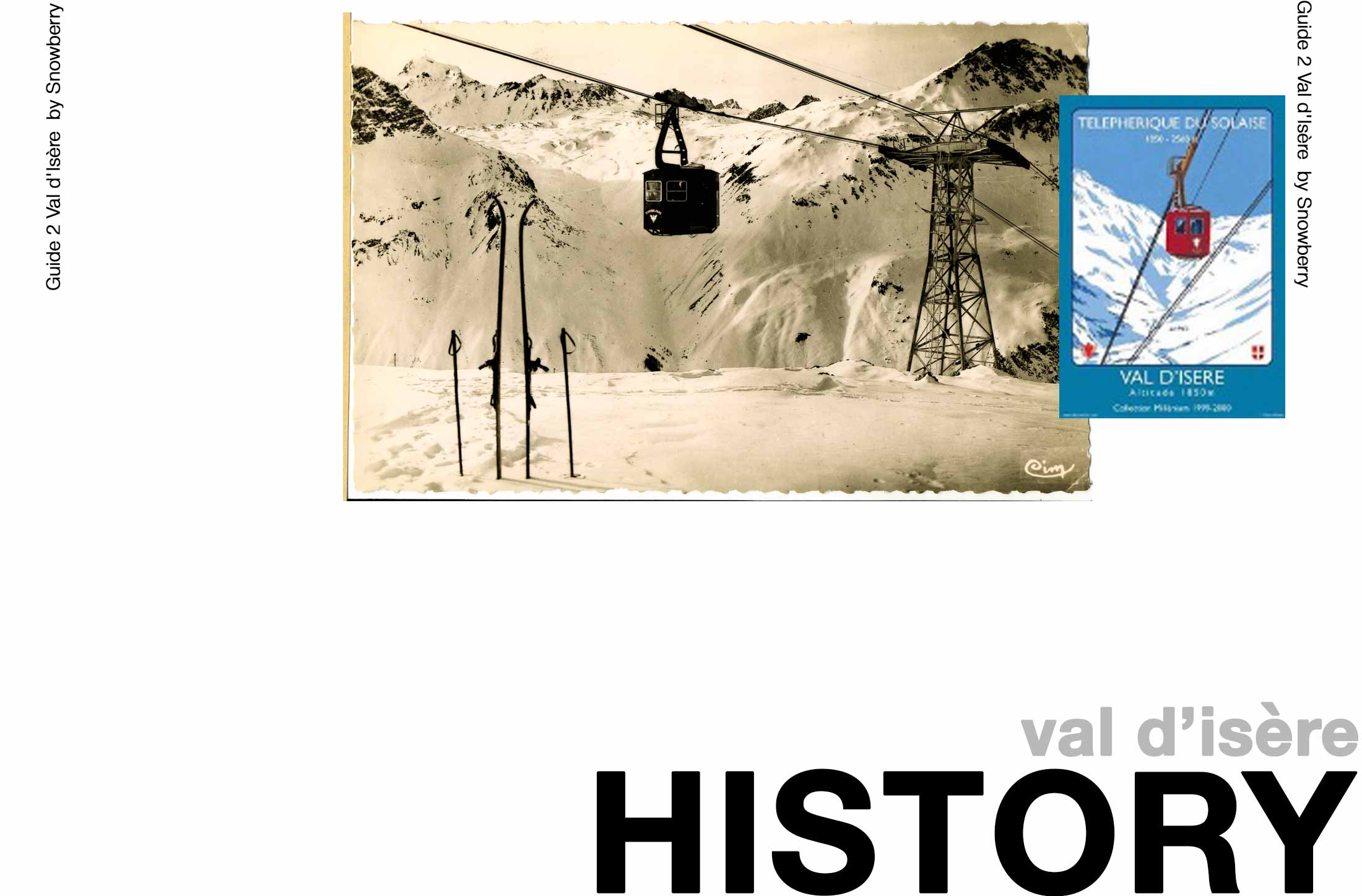
Over the next few years the first ski lift – the Rogoney – was built, the first ski school and the local ski club were all formed, the road ove rthe Col d’Iserean opened and skiing as a sport – and as a means of income for the locals – started to take off. Work had even started on the first cable car, the Solaise.
Then came the Second World War and like everywhere else “normal” life in Val d’isère was on hold for 6 years. Val d’Isère was initially part of Vichy France but later from 1842 onwards was occupied first by Italians and later by the Germans so life became much more difficult for the locals many of whom secretly worked against the occupiers.
There is a wonderful story about the local doctor at the time, Frederic Petri, who helped and a young Jewish girl who had broken her leg, sheltering her and her sister for several months in his home which was actually on the very site where Snowberry Streetside stands today. Even his family were unaware of his bravery until very recently when the daighter in law of one of the girls wrote a book and he was awarded righteous among nations by the Jewish people.
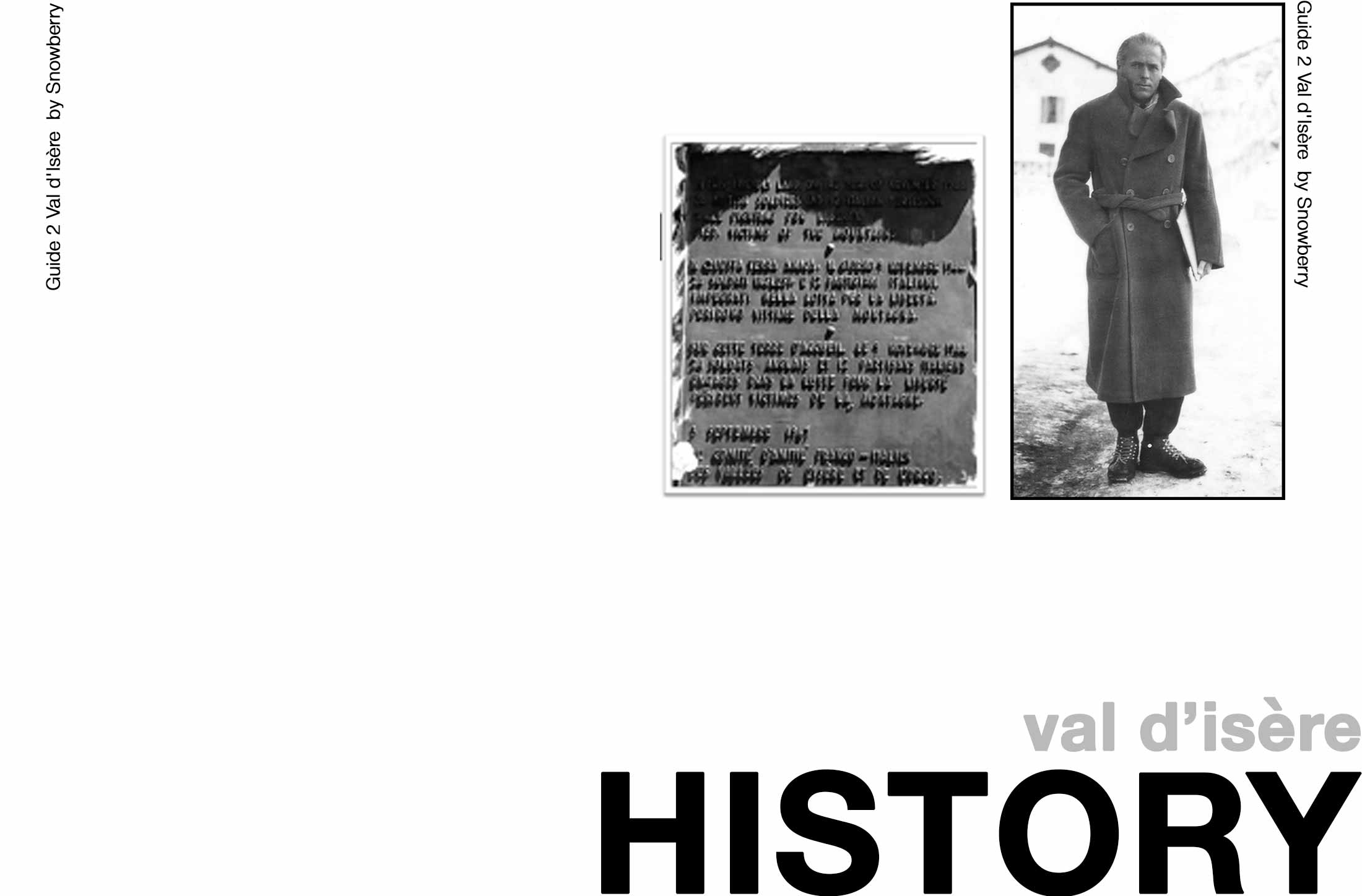
Other stories from wartime Val d’Isère weren’t as happy. In 1944 Gemain Mattis, one of 5 brothers from a prominent local family who again are still here now, was arrested for resistance activities and died in a concentration camp at the age of 27.
Also in 1944, a group of British and Italian POWs escaped from a prison camp in Northern Italy and tried to cross the mountain above Le Fornet into safety. Their guides had done it before and believed it could be done in one day but the weather changed and a terrible blizzard came in. Eleven days later, most of the group had died of cold and exhaustion but 2 British soldiers were still sheltering on the mountain, too exhausted to move.
Two of the Italians had reached the village and raised the alarm and once again Dr Petri came to the rescue, leading a rescue party up to the Prariond. The last surviving soldier was taken down to Le Fornet having spent 10 days sheltering on the mountain and although horribly injured by frostbite he rebuilt his ife, learned to walk again with prosthetic limbs and went on to have a family,
Finally in 1945 the war was over and after six dark years Val d’Isère could finally live again. The Solaise cable car had been completed during the war years, so the expansion of the ski area was already underway.
The post-war years saw both the village and the ski area expanding, bringing tourists to the area and prosperity to the locals. Many of the descendants of the 19th century farming families still own land and property in the village today and have benefited enormously from the development of the ski area.
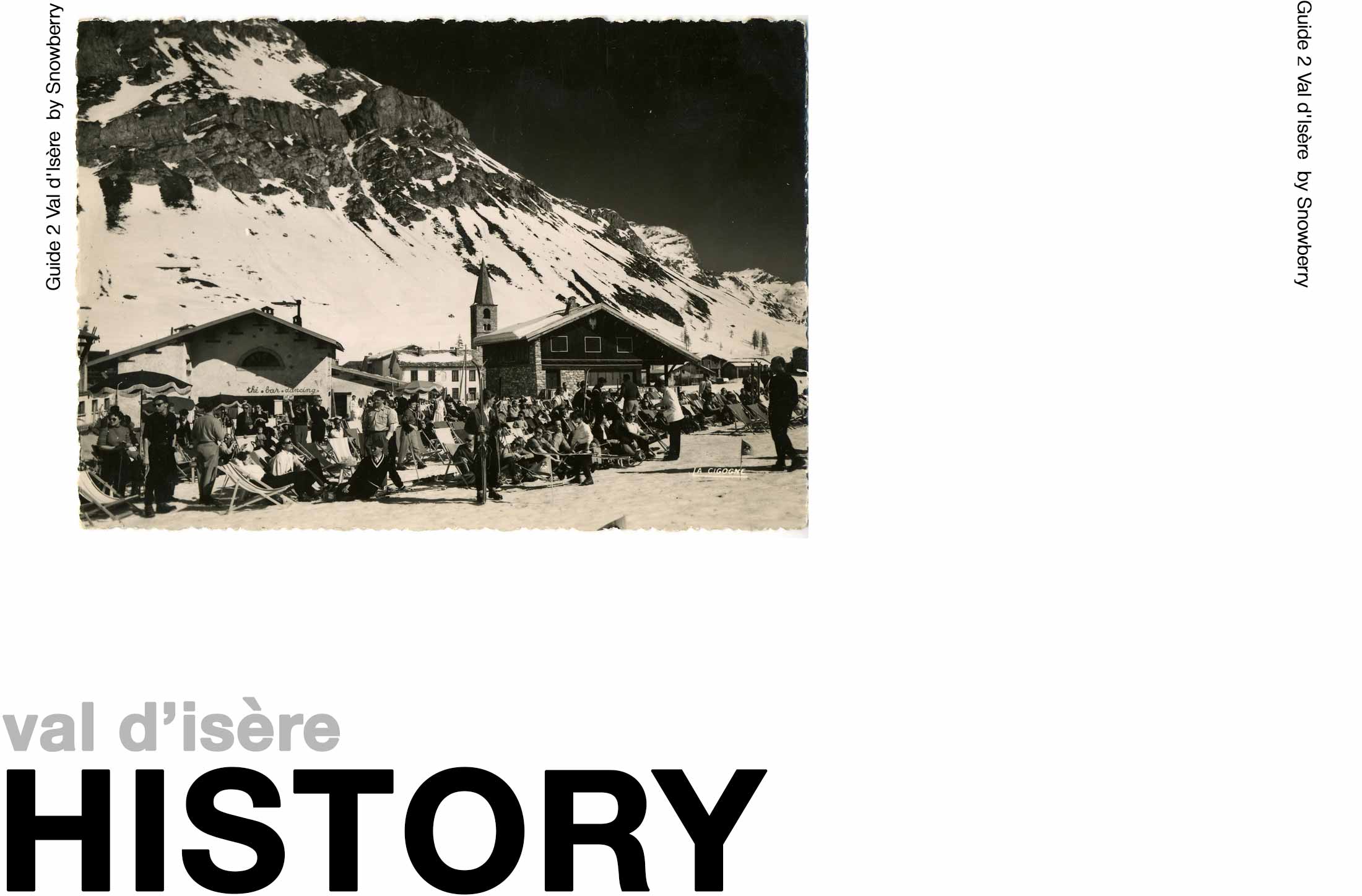
In the 1950s and 60s the Grande Ourse on the snow front was the place to be for après ski and was hugely popular among the fashionable and famous jazz set back then. Jacques Brel, Frankie Alamo and Eddie Barclay were all regular visitors. Rowdy après ski included conga-ing to a famous French song about tuna fish cha-cha-ing up the river to Val d’Isère, which was actually recorded in the Grande Ourse.
The first Tommeuses lift, linking the Val d’Isère and Tignes ski areas, was installed for the winter of 1957–58. By the early 1960s there were around a dozen drag lifts as well as the Solaise and Bellevarde cable cars. The first La Daille bubble arrived in 1967 and the Le Fornet area was opened up to skiers in the early 1970s.
Local boy Jean-Claude Killy won his three Olympic gold medals at the Grenoble Winter Olympics in 1968, helping to put Val d’Isère very firmly on the world skiing map.
Through the 70s and 80s the village continued to develop to accommodate the increasing demand from tourists. Unlike many of the purpose-built concrete jungle ski resorts springing up elsewhere in the Alps, Val d’Isère stayed largely true to its roots, preserving not only its traditional style of architecture but also much of the atmosphere of a real mountain village rather than becoming simply another purpose-built resort.
Tragedy struck the village in February 1970 when a massive avalanche hit the UCPA sports holiday centre at breakfast time, killing 39 people and injuring 37 more. The disaster changed the way avalanche risks were managed throughout the French Alps. Building in avalanche-prone areas became much more tightly regulated, no-build avalanche zones were introduced and much stricter planning and safety rules followed.